 ...
– Essentially text with drawing, graph, diagram....only, few videos (1 or 2) Always the same 3 questions whatever the subject chosen at random : Questions 1 - Present the main ideas of the document(s). 2 - Identify the scientific concept(s) of this exam paper. Explain it(them) with elements from the document(s) and your own knowledge. 3 - Discuss the ethical and/or cultural and/or social questions raised by the document(s). Questions part : You shouldn’t answer only yes or no. You must (…)
Site pédagogique de SVT lycée Grand Air Arcachon (prof. AMROUCHE)
Articles les plus récents
-
Preparing for the DNL
17 février -
chapter 4 : Climate change
17 févrierFor some people, the subject of climate change is top of mind. There are passionately interested want to learn everything they can and are motivated to reduce their carbon footprint*. They’ll like this issue. We all have an interest in fixing this issue before it gets badly out of hand, and it’s getting close to that. There are energy and innovation possibilities, there are biological solutions that would benefit everyone.That’s important that young people upset about their future, (…)
-

Chapter 3 : Australopithecus versus Homo
17 février1.Australopithecus were bipedal and had small brains Present-day humans and chimpanzees clearly differ in two major features : Humans are bipedal (walkupright) and have much larger brains. When did these features emerge ? In the early 20th centurv, paleoanthropologists hypothesized that increased brain size was the initial change that separated hominins from apes. Bipedalism and other adaptations came later as hominin intelligence led to changes in food-gathering methods, parental care, and (…)
-

Chapter 1 : The structure and function of the nervous system (1ère DNL)
17 févrierThe conditions inside our body must be carefully controlled if the body is to function effectively.
Cells called receptors detect stimuli (changes in the environment).
The coordination centre, such as the brain, spinal cord (CNS Centre Nervous System) receives these sensor informations and prepares an appropriate response and sends it to effector bodies
CNS ensure that animal’s response are smooth and coordinated rather than clashing.
How does it work ?
1.Nerve cells
Nerve cells (…) -
Mentions légales
17 févrierL’affichage des mentions légales est une obligation aussi bien pour les sites internet professionnels que pour les sites personnels , en vertu de la loi du 21 juin 2004 pour la confiance dans l’économie numérique (LCEN). En vertu de cette loi, voici les coordonnées de l’éditeur et du prestataire qui accueille le site http://sciencesnat.com
Propriétaire / Éditeur / Directeur de publication
http://sciencesnat.com est un site web édité par Y’a pas de planète B et publié sous la direction de (…) -
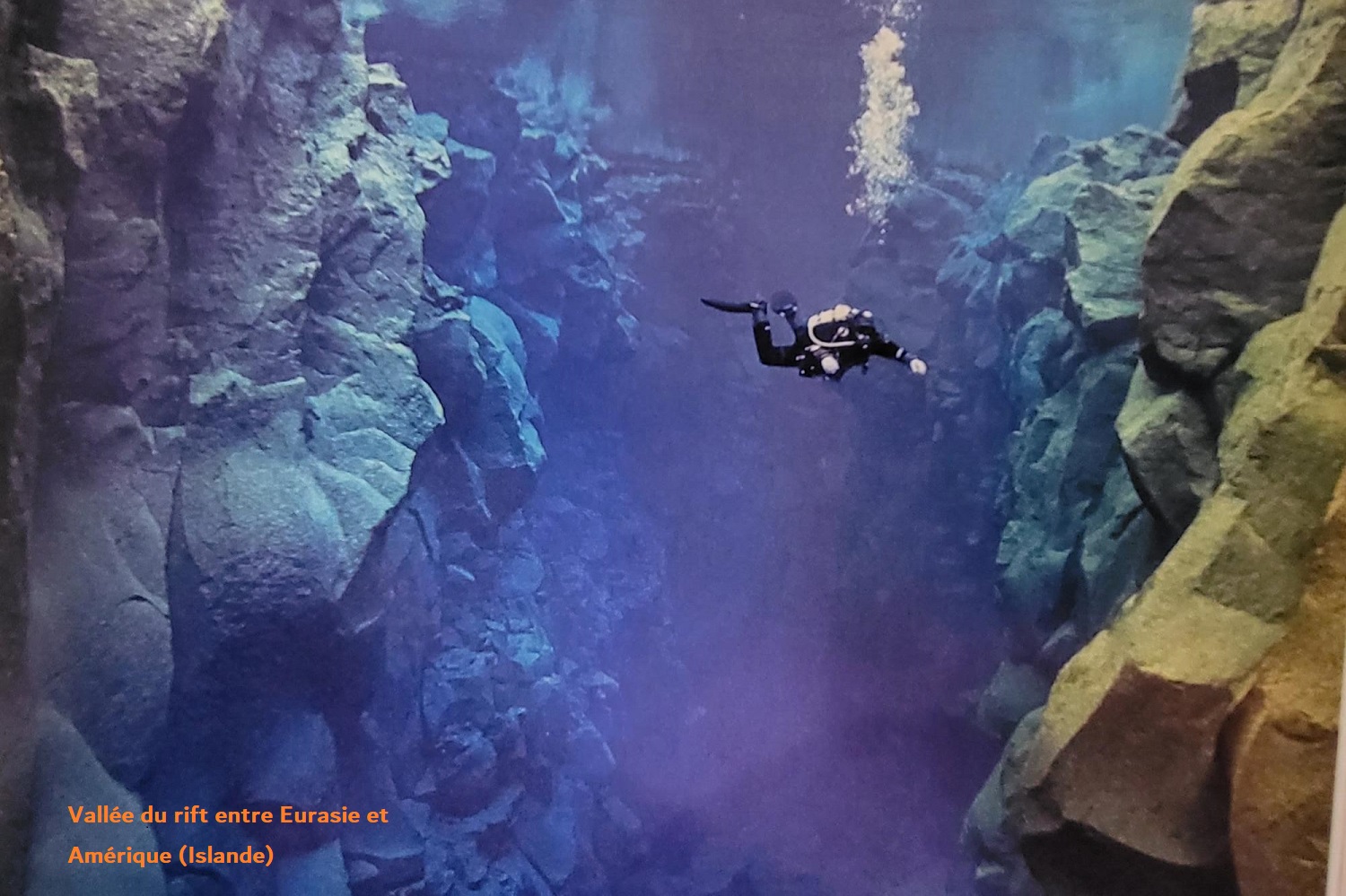
Chap.5G : La dynamique des zones de divergences
19 janvierL’étude des dorsales montre des bombements larges de plusieurs milliers de kilomètres, formant un long réseau de 60 000km, qui domine les plaines abyssales de 2500 m en moyenne. Elles sont caractérisées par un forte activité sismique, magmatique et hydrotermale.
Comment se met en place la lithosphère océanique ? Quelle est l’origine du magma émis par les dorsales ? Que devient la nouvelle lithosphère océanique formée ?
1.La structure d’une dorsale océanique Activité 1 : les idées de (…) -
Chap4G - Revision
17 janvierVoici trois exercices de révisions dont l’un sera au devoir.
Pensez a bien connaitre la structure des roches, le modele PREM de la structure interne de la Terre, les ondes sismiques et ce qu’elles apportent. -
Describe a picture
5 janvierHow to describe a picture : see this https://www.ispeakspokespoken.com/description-image-anglais/
comment on the photo below -
Chapter 2 : Neurons transmit electrical signals to target cells
2 janvierBecause neurons are commonly compared to the wires in a telephone or computer network, mostly people have an intuitive understanding of what the cells do.A neuron is specially adapted to generate an electrical signal most often in the form of a brief self-propagating impulse called an action potential. This signal travels from place to place in the the cell. Neural control has two essentials features :it is fast and adressed.Neuronal signals are fast in that they travel very rapidily (…)
-

Chapter 5 :Bacterial Antibiotic Resistance : The Most Critical Pathogens
1er janvier1.Introduction Although antimicrobial resistance (AMR) is a natural process, the public health emergency due to the uncontrolled spread of this phenomenon depends primarily on the overuse of antibiotics. However, other factors are also primarily responsible for the increase in its prevalence. These factors commonly referred to as "socioeconomic determinants" include poor community hygiene, safer food, poor infection control in hospitals and clinics, accumulation of antibiotics in the (…)